CUDA
"Host":在 CPU 上串行执行
"Device":在 GPU 上并行执行
单个块的线程上限是 1024。
CUDA 是 SPMD(单程序流多数据流)。CUDA 将其分解成 block 并将 block 调度到不同的 SMs 上。
Host 和 Device 有不同的地址空间,需要明确通过 cudaMalloc 进行内存分配,cudaMemcpy 实现内存间的拷贝。
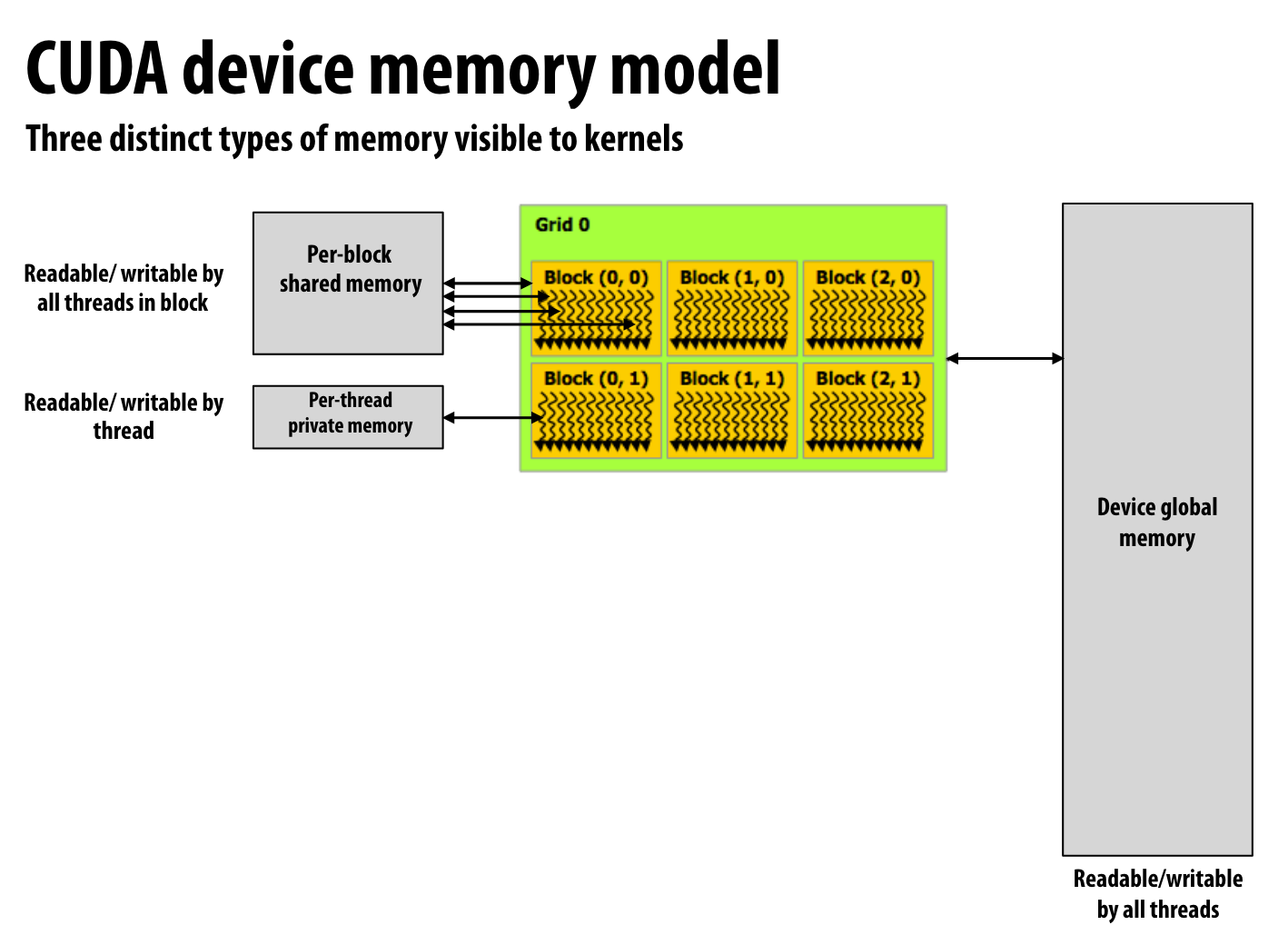
每个块有共享内存可以被块中所有内存读写。
每个线程也有私有内存。
一个卷积的例子
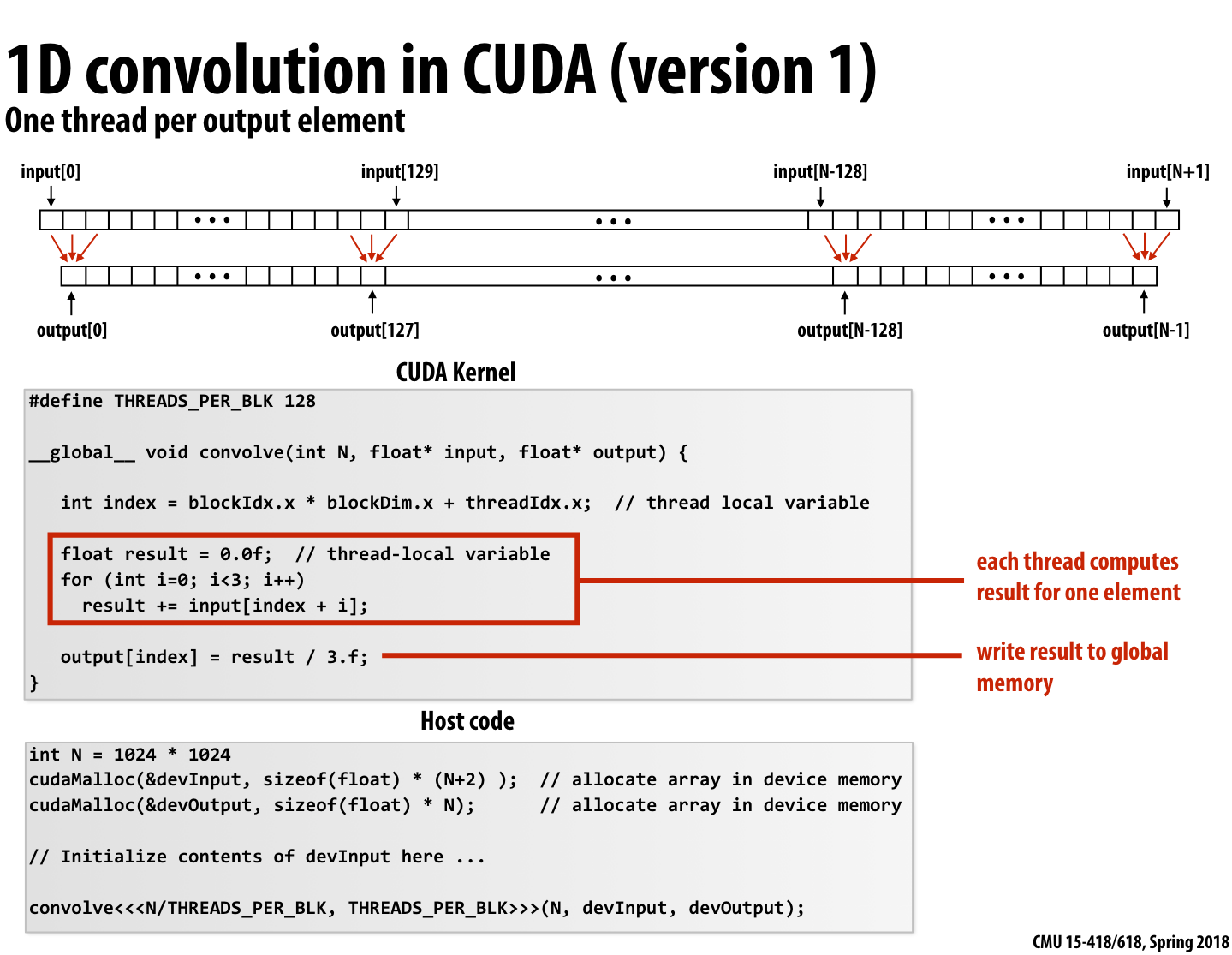
有一些问题:
- 读取太多次全局内存(每个线程进行三次读取,并且不会共享)。
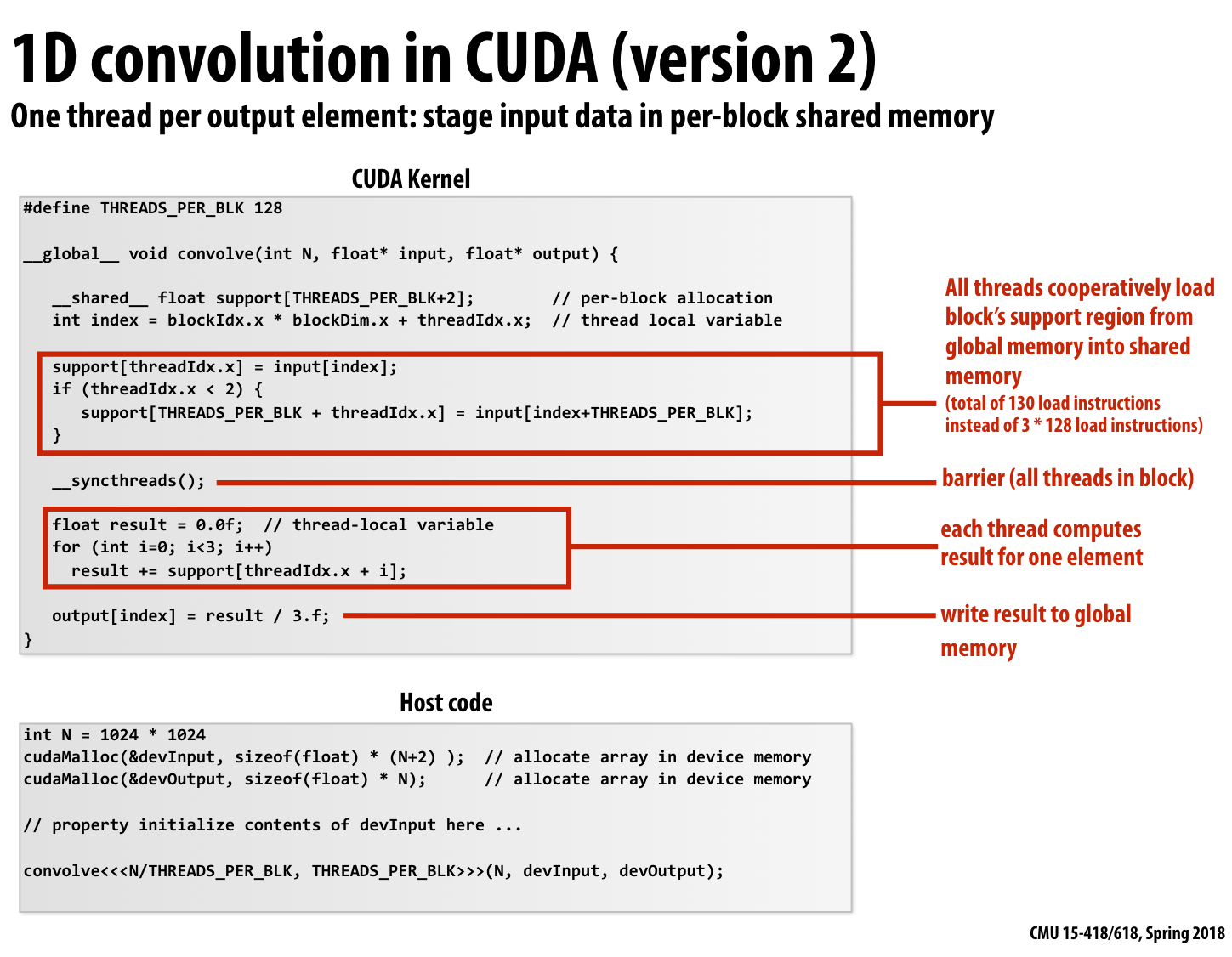
- 添加了共享内存
CUDA syncronization constructs
__syncthreads- 内存栅栏:等待在块中所有线程到达该点。
Atomic operations
- 原子指令作用在全局内存和共享内存变量上。
Host/device synchronization
- Implict barrier across all threads ay return of kernel.
Vocabulary
Kernel:The work,函数的写法,可以在 GPU 核上并行执行。
Thread:与 kernel 工作相关的实例的抽象。
Thread Block:线程和相关工作的划分,将被分配到 SM 上运行。
Grid:所有 blocks 的集合。
Streaming Multiprocessor(SM):A collection of CUDA Cores architected together to form a single GPU. Threads within a thread block concurrently execute on an SM.
Warp:SM 内创建的 block 的划分,用于将工作派发给 cores。在 warps 中的每个线程都有可用的 core 前不会被调度。
Syntax
someGlobalFuctionName<<N,M>>
Kernel Launch
N thread blocks
M threads per thread block
blockIdx: block index within the(up to 3D) grid
- threadIdx.x is 1D index
threadIdx: thread index within the(up to 3D) thread block
- threadIdx.x is 1D index
int index = threadIdx.x + blockIdx.x * M;
- Global thread index, given M threads per block
blockDim, gridDim
3D block and grid dimensions
E.g., blockDim.x, gridDim.x, etc.
Why is printf() werid?
printf() output is stored in a circular buffer of a fixed size.
- If the buffer fills, old output will be overwritten. The buffer's size defaults to 1MB and can be configured woth
CUDADeviceSetLimit(CUDALimitPrintfFifoSize, size_t size).
- If the buffer fills, old output will be overwritten. The buffer's size defaults to 1MB and can be configured woth
This buffer is flushed only for
the start of a kernel launch
synchronization(e.g. CUDADeviceSynchronize())
blocking memory copies(e.g. CUDAMemCpy(...))
module load/unload
context destruction
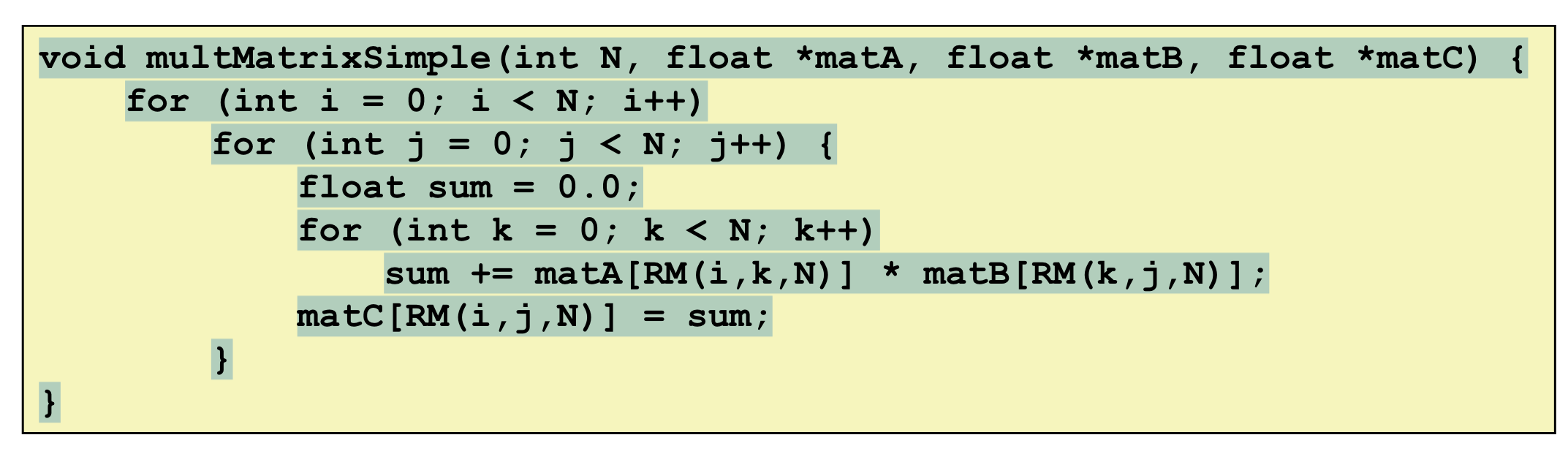
Application Example: NxN Matrix Multiplication
简单实现
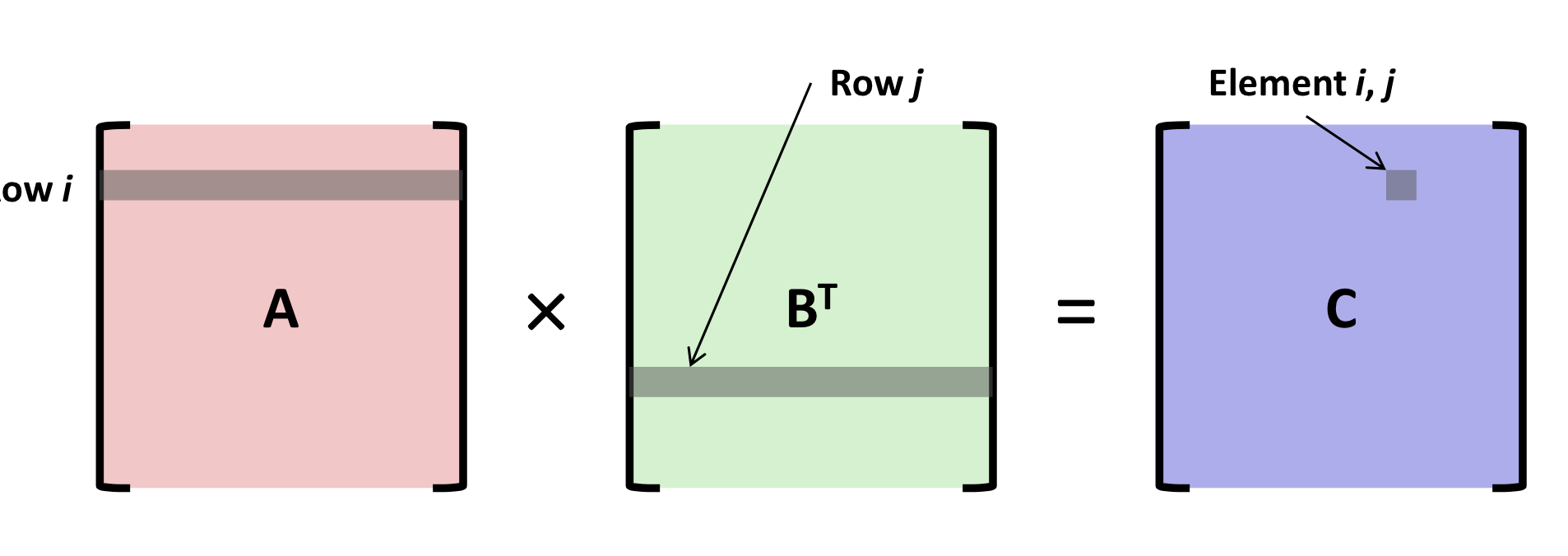
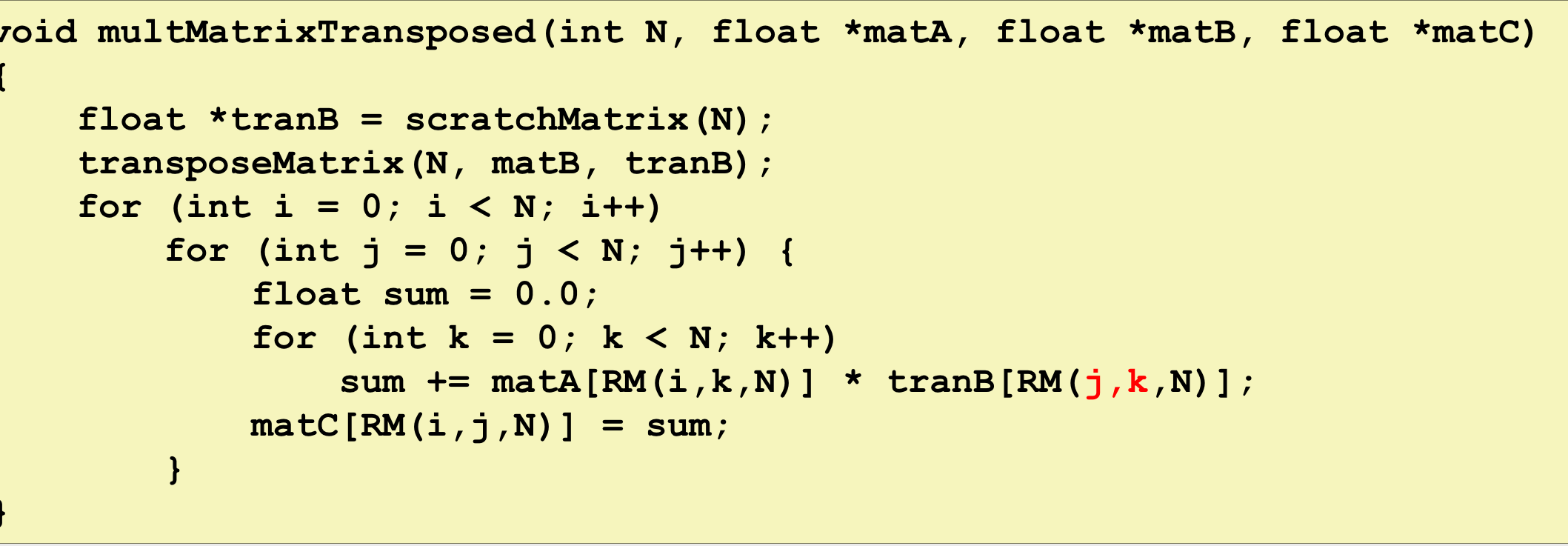
Optimization #1: Pretranspose
使用 B 的转置进行计算具有更好的程序
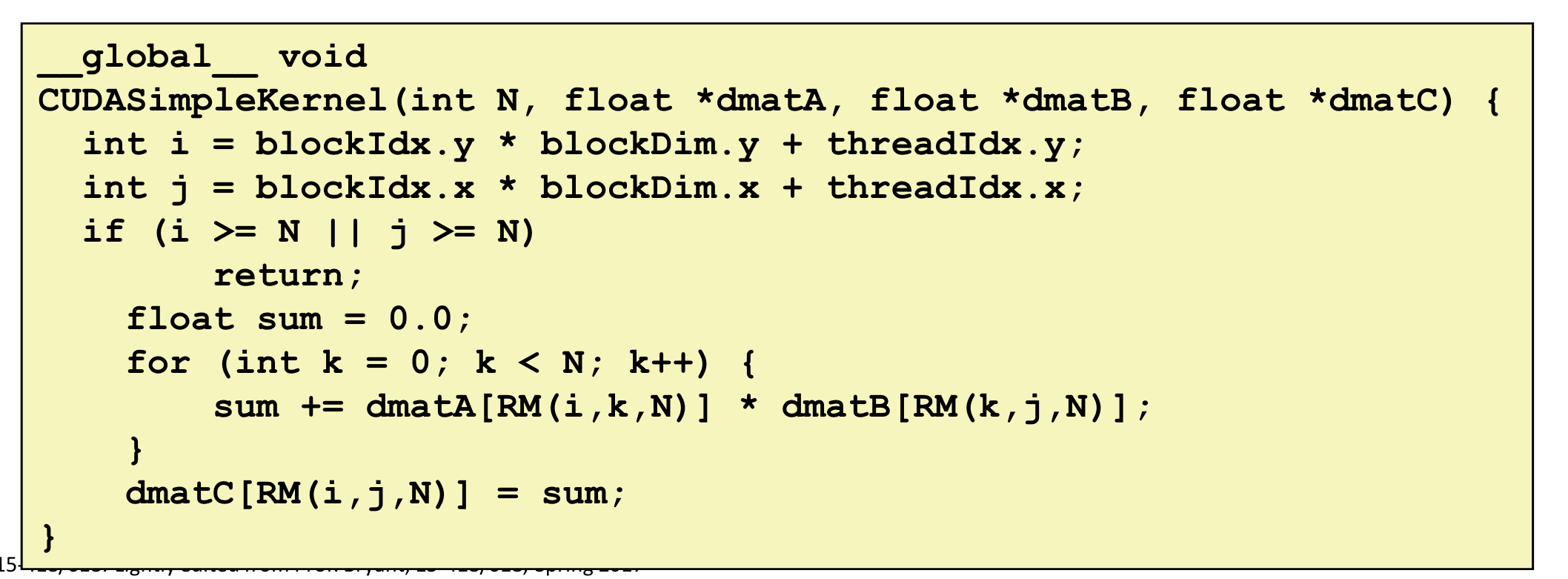
Simple CUDA Implementation
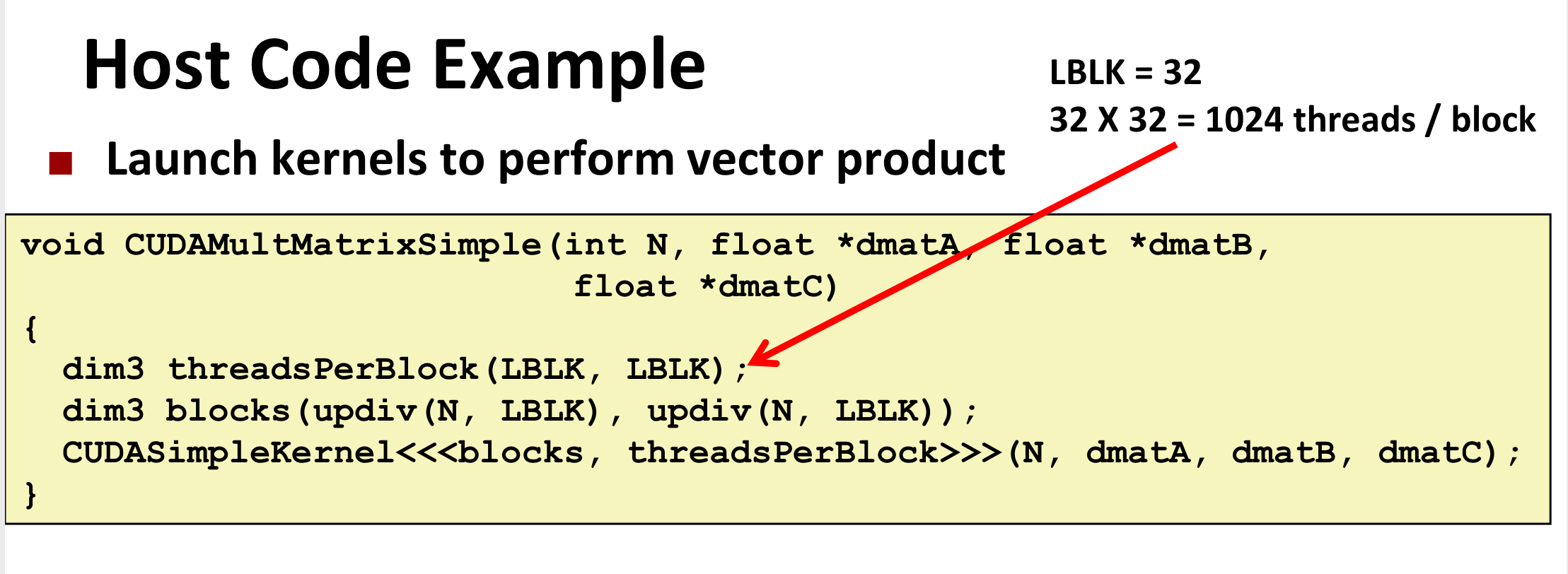
MM Optimization #2: Partitioning into Blocks
Block/Thread Notation
Idea(One-dimensional version)
Executing threads grouped into blocks
Each contains same number of threads
- Host program specifies block size(blockDim.x)
Host program makes sure there are enough blcoks to generate N threads
Some threads in last nlock should not get used
CUDA Program
CUDA file(.cu) contains mix of device code & host code
Device Code
Kernels(_glocal_)
Code for threads
Must only reference device memory
Device functions(_device_)
Called by kernels
Only reference device memory
Do not generate new threads
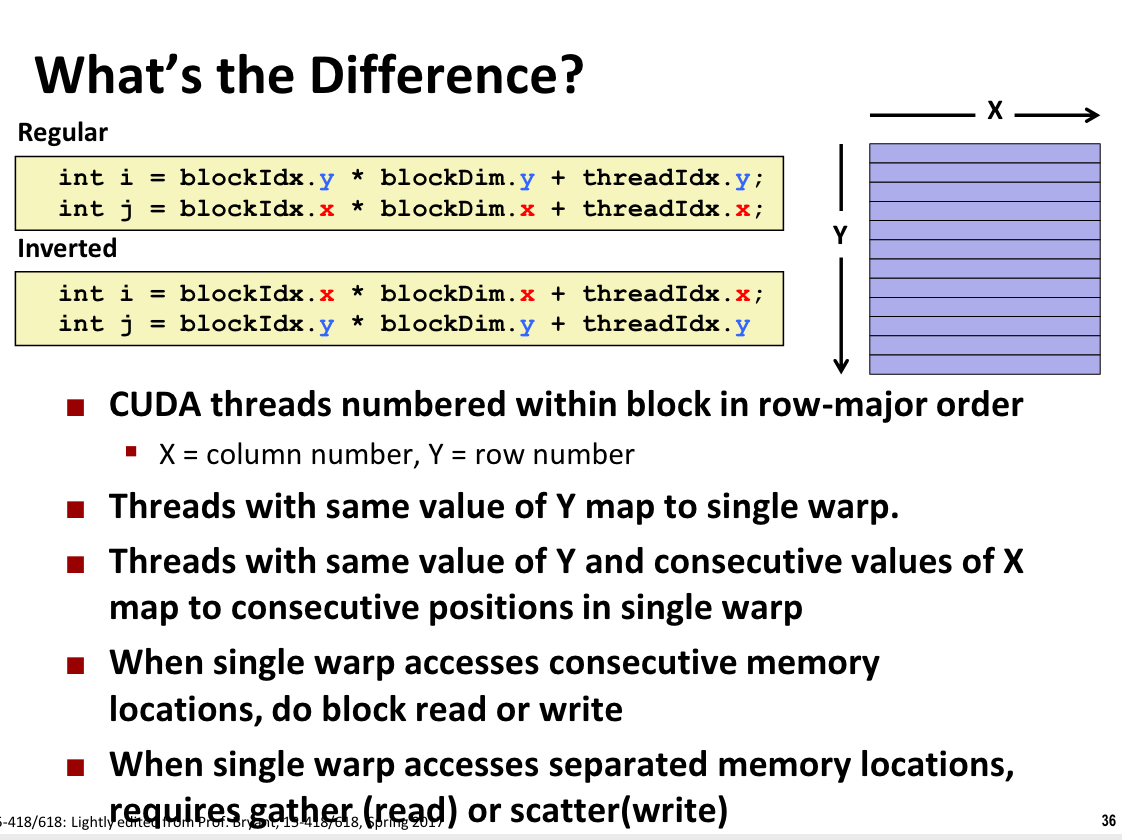
CUDA Inverted Indexing